

World Heritage Sites
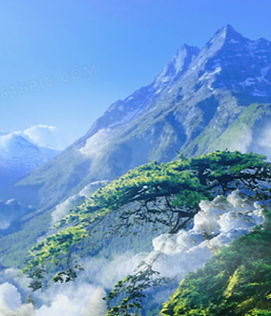
Mount Tai (Taishan)
Mount Taishan is the most revered of the "Five Sacred Mountains" of China. For over 2,000 years, it served as the ultimate site for imperial pilgrimage, where emperors performed the Fengshan sacrifices to pay homage to Heaven and Earth. The mountain is a "living museum" of Chinese history, blending breathtaking natural granite peaks and ancient forests with thousands of stone inscriptions, historic temples, and a stairway of over 6,000 steps leading to the "South Gate to Heaven."

Xixia Imperial Tombs (Oriental Pyramids)
Often referred to as the "Oriental Pyramids," this site is the necropolis of the Western Xia Dynasty (1038–1227), founded by the Tangut people. Located at the foot of the Helan Mountains, the site covers 40 square kilometers and comprises nine imperial mausoleums and 271 satellite tombs. The ruins represent a unique fusion of Han Chinese, Tangut, and Buddhist architectural traditions, standing as a silent witness to a "vanished" civilization that was once a major power along the Silk Road.

Beijing Central Axis
The Beijing Central Axis is a 7.8-kilometer-long line of historic structures and public spaces that defines the layout of the old city. Established in the 13th century and perfected during the Ming and Qing dynasties, it represents the "ideal order" of Chinese statecraft and urban planning. It showcases the traditional Chinese aesthetic of symmetry and the philosophical concept of the "Middle Way," linking imperial palaces, temples, and civic squares into a single architectural masterpiece.

Jingmai Mountain Ancient Tea Plantations
This site is the world’s best-preserved example of ancient understory tea cultivation. Developed over a thousand years by the Blang and Dai peoples, the landscape features a unique three-layered ecosystem: high mountain trees for shade, ancient tea shrubs in the middle, and natural flora on the forest floor. This traditional "understory" method produces the world-renowned Pu’er tea while maintaining high biodiversity and a sacred connection between the local communities and their "Tea Ancestors."

Quanzhou
During the 10th to 14th centuries AD, Quanzhou (known as Zayton to Arab traders) was one of the world's most vibrant and important maritime ports. This serial property of 22 sites illustrates a sophisticated system that combined coastal production (ceramics and iron), a vast transportation network of bridges and docks, and a multicultural community. It remains a unique testament to the "Maritime Silk Road," where diverse religions—including Buddhism, Islam, Taoism, and Manichaeism—coexisted peacefully.

Liangzhu Ancient City
Dating back to 3300–2300 BC, the ruins of Liangzhu City reveal an early regional state with a unified belief system based on rice agriculture in Late Neolithic China. The site features an exquisite social hierarchy, sophisticated water management systems, and a complex urban layout. It provides indisputable evidence that Chinese civilization began over 5,000 years ago, placing it alongside the ancient civilizations of Egypt, Mesopotamia, and the Indus Valley.
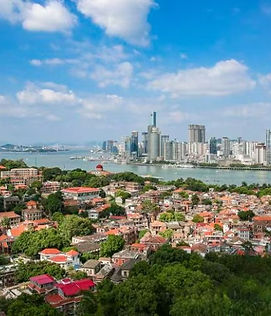
Gulangyu Island
Located on the estuary of the Chiu-lung River facing Xiamen, Gulangyu is a tiny island that became an international settlement in 1903. It is a exceptional example of cultural fusion, where traditional Chinese architecture, local South Fujian features, and Western Neoclassical and Romantic styles merged to create the unique "Amoy Deco" style. The island is also famous for its musical heritage, known as the "Island of Pianos."

Zuojiang Huashan Rock Art
Located on the steep limestone cliffs along the Zuojiang River, these 38 sites of rock art date back to the 5th century BC. They illustrate the life and rituals of the Luoyue people, ancestors of the modern Zhuang ethnic group. The paintings, characterized by their vivid red pigment and "frog-like" human figures, depict ceremonies, drums, and weapons, harmonizing perfectly with the surrounding river and karst peaks.

Tusi Sites
This property encompasses the remains of three tribal domains: Laosicheng, Tangya, and the Hailongtun Fortress. These sites represent the Tusi system, an ancient political mechanism used by Chinese emperors to govern ethnic minority regions in the southwest. The system allowed local hereditary leaders to maintain their own customs and social structures while swearing loyalty to the central government, fostering a unique blend of ethnic culture and imperial administration.

Silk Roads: Chang'an-Tianshan Corridor
This 5,000 km section of the ancient Silk Road network connects the ancient Chinese capital of Chang'an (Xi'an) with the Zhetysu region of Central Asia. It encompasses 33 component sites, including imperial capitals, palace complexes, Buddhist cave temples, ancient paths, beacon towers, and sections of the Great Wall. It flourished between the 6th and 14th centuries AD as a major artery for trade, religious beliefs, and scientific innovation.

The Grand Canal (China)
The Grand Canal is a vast inland waterway system that forms the backbone of China's north-south communication and trade. Originally constructed in sections starting in the 5th century BC, it was unified during the Sui Dynasty (7th century AD). Extending over 1,700 km, it connects five of China's major river basins, including the Yangtze and the Yellow River, and remains a living masterpiece of hydraulic engineering.

Honghe Hani Rice Terraces (Yuanyang Terraces)
Carved over 1,300 years by the Hani people, these spectacular terraces cascade down the Ailao Mountains to the banks of the Hong River. The site represents a unique "four-fold" ecological system: mountaintop forests (water catchment), traditional villages, vast rice terraces, and the river system. It is a living testament to a resilient land management system that balances spiritual, ecological, and social resources.

Site of Xanadu
Located north of the Great Wall, the Site of Xanadu contains the remains of Kublai Khan’s legendary capital. Built in 1256, it was the site where the Mongol leader founded the Yuan Dynasty and ruled as the first Emperor of China. The city is a unique example of a "summer capital" where nomadic Mongol culture and sedentary Han Chinese civilization intersected. It consists of the Palace City, Imperial City, and Outer City, all surrounded by the vast Jinlianchuan Grassland.

West Lake Cultural Landscape of Hangzhou
The West Lake Cultural Landscape of Hangzhou comprises the West Lake and the hills surrounding its three sides. For centuries, this site has inspired famous poets, scholars, and artists with its "ideal fusion between man and nature." The landscape includes causeways, artificial islands, temples, pagodas, and ornamental gardens, which have profoundly influenced garden design in China, Japan, and Korea for over a millennium.

Historic Monuments of Dengfeng
Situated at the foot of Mount Songshan, one of the most sacred mountains in China, these monuments are grouped around the concept of "The Centre of Heaven and Earth." The site comprises 11 historical buildings and structures, including the famous Shaolin Temple, ancient observatories, and ritual gates. These structures, built over nine dynasties, reflect the ancient Chinese belief in the mountain as the center of the universe and serve as exceptional examples of religious, scientific, and educational architecture.

Mount Wutai
Mount Wutai, known as the "Five-Terrace Mountain," is the most sacred of the Four Sacred Buddhist Mountains in China. As the dwelling place of the Bodhisattva of Wisdom, Manjusri, it serves as a unique cultural landscape that harmonizes natural beauty with deep spiritual significance. The site contains a cluster of 53 monasteries spanning from the 1st century AD to the early 20th century, showcasing the evolution of Chinese Buddhist architecture and its influence on imperial palace design.

Fujian Tulou
The Fujian Tulou are unique Chinese rural dwellings of the Hakka and Minnan people. These 46 multi-story earthen buildings, constructed between the 12th and 20th centuries, were designed for both communal living and defense. Set amongst rice, tea, and tobacco fields, these "little kingdoms for the family" feature thick rammed-earth walls, circular or square layouts, and a central courtyard.

Kaiping Diaolou and Villages
The Kaiping Diaolou are multi-story defensive village houses in Guangdong Province, which display a complex and confident fusion between Chinese and Western structural and decorative forms. Built mainly by returning overseas Chinese (Huaqiao) in the early 20th century, these buildings served both as housing and as temporary refuges against local bandits.

Yin Xu
Yin Xu is the site of the last capital of the Shang Dynasty (c. 1300–1046 BC). It is a milestone in Chinese history, serving as the birthplace of modern Chinese archaeology and the site where the oldest known form of Chinese writing, the Oracle Bone script, was discovered. The ruins offer irrefutable evidence of the late Shang Dynasty's existence and its advanced Bronze Age civilization.

The Historic Centre of Macao
The Historic Centre of Macao is a unique collection of over 20 locations that witness the first and longest-lasting encounter between China and the West. This urban labyrinth of squares, churches, temples, and government buildings illustrates the successful coexistence of Portuguese and Chinese cultures, traditions, and architectural styles over four centuries.

Yungang Grottoes
Located at the southern foot of Wuzhou Mountain, the Yungang Grottoes are a masterpiece of 5th and 6th-century Chinese Buddhist cave art. Commissioned by the Northern Wei imperial court, the site features 252 caves and over 51,000 statues, representing a unique fusion of South and Central Asian religious symbolism with Chinese cultural traditions.

Ancient Villages in Southern Anhui
These two traditional villages preserve to a remarkable extent the appearance of non-urban settlements that disappeared or were transformed in the last century. Their street plan, architecture, and decoration, as well as the integration of houses with comprehensive water systems, are unique survivors of the "Hui-style" architecture and feudal merchant culture.
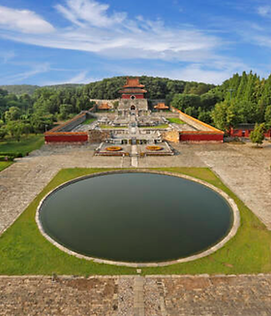
Imperial Tombs
This UNESCO World Heritage site is a collection of several imperial tomb complexes spanning over 500 years of Chinese history. These tombs illustrate the evolution of funerary architecture and the profound influence of Feng Shui (geomancy), representing the highest level of craftsmanship and the cosmic integration of human authority with nature.


Dazu Rock Carvings
The Dazu Rock Carvings represent the highest level of grotto art from the 9th to the 13th centuries. They are remarkable for their aesthetic quality, their rich diversity of subject matter—blending Buddhism, Taoism, and Confucianism—and the vivid light they shed on everyday life in ancient China.

Temple of Heaven: an Imperial Sacrificial Altar in Beijing
The Temple of Heaven is a masterpiece of architecture and landscape design which simply and graphically illustrates a cosmogony of great importance for the evolution of one of the world’s great civilizations. It was where Ming and Qing emperors performed annual rites of sacrifice to heaven for good harvests.

The Summer Palace, an Imperial Garden in Beijing
A masterpiece of Chinese landscape garden design. The Summer Palace integrates the natural landscape of hills and open water with artificial features such as pavilions, halls, palaces, temples, and bridges to create a harmonious ensemble of outstanding aesthetic value.


Pingyao
Founded in the 14th century, Pingyao is an exceptionally well-preserved example of a traditional Han Chinese city. Its urban fabric reveals the evolution of architectural styles and town planning in Imperial China over five centuries, and it is world-renowned for its role as the financial center of China during the 19th and early 20th centuries.

Lushan National Park
Lushan is an outstanding representative of Chinese culture, where the spiritual essence of Chinese civilization meets a stunning natural landscape. It is the birthplace of Chinese landscape poetry and a historic center for Buddhism, Taoism, and Confucianism. The park also features a unique collection of early 20th-century international architecture.

Potala Palace
The Potala Palace, the winter palace of the Dalai Lama since the 7th century, symbolizes Tibetan Buddhism and its central role in the traditional administration of Tibet. The ensemble includes the Jokhang Temple Monastery and Norbulingka (the summer palace), forming a unique complex of religious and administrative architecture.

Wudang Mountains
This complex represents the pinnacle of Chinese architectural achievement over a period of nearly 1,000 years. As the supreme center of Taoism, the palaces and temples were built to harmonize with the natural peaks and valleys, reflecting the core Taoist principle of "harmony between man and nature."


Mountain Resort
Built between 1703 and 1792, this was the summer palace of the Qing Dynasty emperors. It is a vast complex of palaces and administrative and ceremonial buildings, surrounded by a landscape of lakes, forests, and mountains that harmonizes different architectural styles from across China.


